Showing posts with label Kat. Show all posts

Thursday, June 3, 2010

End of Year: Reflection Post


In this post I will share my feelings on blogging.

Overall, I think it was a really cool project. (Even tough I didn't like the comment every week part.) I loved reading what other people have to say on the subject we had been learning. I also really liked reading what the other grades were doing. But the best part was learning these different things. For me, "these different things" included learning how to embed a link and upload a picture. I would totally do this again and can't wait to read next-year's blogs!
However, there were some down-sides. One of them was the comment per week. Actually, that wasn't the bad part. The part I didn't like was having to have specific amounts of comments to each blog. I always forgot which blog I had commented to, and I think it would've been easier just to have to have 9 comments, at least one to each blog.
And here are some things I think should happen next year!
1. Change the background each quarter! The background on our blog, after 3 quarters, is kind of boring. Changing the colors could be really fun!
2. Scribes should definitely be in touch with other schools! It would be so much fun to be able to see what other science classes around the world are doing!
3. Have a quick "reminder" lesson each quarter on how to add pictures, links, videos to a blog post at the beginning of each quarter so the less "tech-savvy" people could still have really cool posts!
In conclusion, I really liked blogging and can't wait to see how next year's blogs look!

Thursday, May 27, 2010

Heart Dissection!


Today, everyone was very excited because we were going to start dissection! However, before we could do that, Ms. D went through the rest of the Chapter 3 Notes (that can be found on Moodle)


She also reminded us that on Tuesday, June 1st we will have our last QUEST and the last IMPORTANT GRADE OF THE YEAR! Some things to remember for the test are: how to know if something is alive (Movement Respiration Sensitivity Growth Reproduction Excretion NRG/Nutrients; MRS GREN), and the Skeletal and Circulatory Systems. It would also be wise to read about the Digestive and Respiratory Systems. For anyone who has any questions, there will be a study session during lunch on Monday. You can also study the Google Doc notes we took in class to which you were all invited (Cell Notes N, V, and K).


After we went through this we got to start the dissection part of class. We were seated in groups of 2 or 3 and we were each handed a dissecting pan and the equipment (we only used the forceps, scissors, and the blunt probe). Most of us got gloves, but a couple people preferred to be bare-handed.

The first part of the dissection, once everything was set up, was exploring the outside of the heart and looked for the following things: left side of the heart, right side, dorsal (back) side, ventral (front) side, superior (upper) side, inferior (lower) side, apex, coronary vessels aorta, pulmonary arteries, pulmonary veins, superior vena cava, and the inferior vena cava. We could find all this using our heart diagram from the packet (also found on Moodle). Not until we found all of this and showed it to Ms. D could we move on and actually start dissecting!


The second part also consisted of searching for parts of the heart, this time for the right atrium, the left atrium, the aorta, the pulmonary arteries, the superior vena cava, the inferior vena cava, the left ventricle, the right ventricle, the mitral valve, the tricuspid valve, the aortic valve, the pulmonary valve, and the right ventricle.


Once Ms. D had checked to be sure that we knew the parts, we could clean up, and answer the questions due on Friday. These can be found on Moodle labelled as "Heart Dissection".


Here are some videos I found on the topic of dissection:


  • Pig Heart Dissection-Not too clear at some parts, but this video has some cool facts and it's a great way to see if you didn't quite feel that you dissected the heart correctly...

  • Heart Anatomy-For people who need to see the heart at work!

Lastly, I will tell you how this relates to our daily life. I find it very important to know what is going on inside of you everyday, all your life. Dissection is a great way to learn and see what goes on inside our bodies (or animal bodies). Also, it helps squeamish people get past their fears!


Things due tomorow!


  • Heart Dissection Answers


  • Comment by 4:00 P.M. (Remember! 3 for 8th grade, 3 for 7th grade and 2 for 6th grade)

And remember to check Moodle to see what we are doing for the rest of the year!


The next (and last) scribe is VANCE!


-------------------------------------


Take care of your body. It's the only place you have to live. ~Jim Rohn


-------------------------------------


Added Notes:


I found dissection a bit gross, and a bit weird, but a very cool and fun way to learn about the body. Though, the cow heart was pretty big and couldn't be laid in the pan so that we could see both side's internal parts at the same time. But, I personally can't wait to dissect again!


The tools we used in were the forceps (tweezers), scissors, and the blunt probe. A blunt probe is "a long, slender instrument for exploring wounds or body cavities or passages. " (From WikiAnswers) In my group we used it to figure out where the blood vessels we found let to as well as to poke at the heart in smaller holes.

a blunt probe


Thursday, April 22, 2010

On My Mind: Earth Day

So I was browsing around looking for one of my old favorite "Go Green" websites and I also found a bunch of other great ones:

So, happy Earth Day!

Tuesday, April 13, 2010

Reflection Post: Comments on Other Blogs.

During the third quarter we worked on simple machines. Our blog was full with pictures of srews, levers, wedges... We also started working with the Canadian blogs. We read and commented on their posts. Since the 8th grade started blogs, we were assigned to comment on their posts. I think that commenting on others people's blogs was the hardest, since it got hard to understand what they were talking about if we hadn't learned learned what they learned.
Other than that, blogging this quarter was a lot more fun, even if it was more advanced. I can't wait to continue this quarter.

Thursday, March 18, 2010

Cigarettes, Pulleys, and Zippers


Today, we had a very SPECIAL guest come to our even more WONDERFUL seventh grade class. She came to talk about being addicted to...........cigarettes! (For anyone out there who smokes, know that cigarettes also contain chemicals found in whale vomit, make-up, and poison used by the Nazis.) She told us how smoking ruined her private life. She could not do the things she loved like singing and dancing, and how her loved ones constantly worry about her health. Smoking also has the side affects of lung cancer, heart diseases, and many other forms of deadly illnesses. She also mentioned that cigarettes had taken over her life and that when she tried to quit, she would lie to herself, to her husband....


Our class had many questions ???? about smoking, quitting smoking, cost of smoking, well, basically plain old smoking. Even after our guest left, we continued discussing smoking. Here is a wonderful picture showing us a few of the chemicals in something more than 1.3 billion people smoke around the WORLD every day.


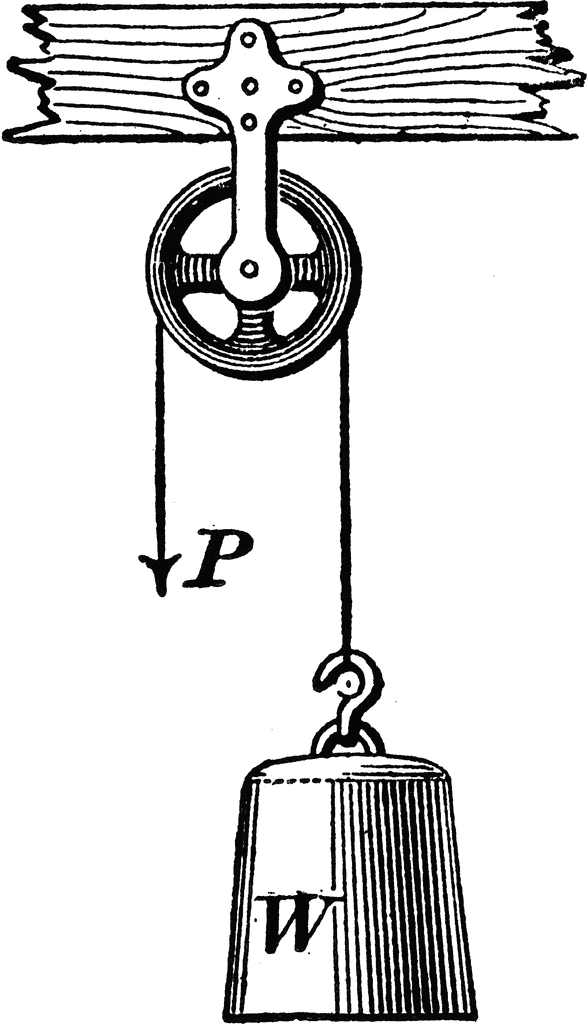
Next we had JULIA and GIO teach us about the SIMPLE MACHINE called the PULLEY! Some things that we learned where:


  • a pulley consists of a wheel and a rope


  • the pulley changes the direction and amount of force needed


  • there are 3 types of pulleys; the fixed pulley (most common), the movable pulley and the block and tackle (a combination of both, an example is the crane)


  • for a fixed pulley the input force and the output force act in different directions, and the mechanical advantage is 1


  • the output and input force of a movable pulley act in the same direction and the mechanical advantage is 2


  • a block and tackle's mechanical advantage is 3


  • some places pulleys can be found include, flagpoles, wells, garage doors (fixed pulleys), and a crane (block and tackle)


The input force is the rope being pulled down and the output force is the object moving up.


The answer to Tuesday's RaNdoM SciEncE QuEsTIon (Who invented the zipper?) is......Whitcom Judson (clasp locker, a zipper that would be pulled apart), Gideon Sundback (improved it), and Elias Howe (the actual zipper as we know it today).


DO NOT FORGET! DO NOT FORGET! DO NOT FORGET!


Math Sheet due tomorrow! How does Ms D know you tried? The formulas are written down.


There will be a quiz next Tuesday, March 23rd. It will be about WORK, POWER, and SIMPLE MACHINES.


The unlucky person to be the next scribe is .....*drum roll please*................JULIA LEE!


"He who would learn to fly one day must first learn to stand and walk and run and climb and dance; one cannot fly into flying. "
--------Friedrich Nietzsche

Friday, January 22, 2010

Weblogs, Book Logs, and Blogs?

W-E-B-L-O-G (Wonderfully Entertaining Basic Log Over Generations) weblogs, more commonly known as blogs are used all over the world. Most people use it as their family newspaper to let others know what they are doing, from licking a lollipop to visiting Cairo. The AISZ SEVENTH GRADE SCIENCE CLASS, however used it for something else.
As we all know, SCIENCE, can be quite boring (just joking!). To spice it up, Ms D decided to use the computer, (the love of the children in the 21st century). Using blogger.com she decided to have a "SCRIBE" write what has happened that day in class. I was the first scribe. Here at the problems I had:
  • blogger doesn't allow JING pictures to be big.
  • pictures can only be in a couple of places
  • commenters can't put direct links (clickable ones)

Here are the ups to blogging

  • none
  • none
  • none
  • being able to see what happened in class if you were sick
  • having fun and learning computer-related things
  • seeing all the people who visited your blog
  • having fun in general

Overall, I enjoyed blogging and can't wait 'till next quarter, when we'll comment on some other class' blog and have them comment on ours.

Thursday, December 10, 2009

Science Day!

Today is Science Day!
We had a 3-2-1 Pop! lab with paper rockets, a blog center, our laptop center and a ramp where we find the speed of a ball.
We'll keep you updated!
7th grade Science class!

Sunday, November 15, 2009

Technology in Science...

It didn't matter that it was Friday the 13th in Science since we got to try out the new

STUDENT LAPTOPS!

Below is a very fuzzy jing picture about them. Sorry about that-Blogger won't let me make it any bigger.


Before playing with the laptops we were put into groups:
Group T-Viktor, Erik, Antonia and Fabi
Group S-Reza, Cip, Emilie and Noam
Group D-Bryce, Vance, Iva and Gio
Group R-Laura, Alix, James and Kat

Then we each went onto our Gmail accounts and accepted the invitation from Ms.D to be part of a Google Doc.
Each group had to write a definition for the following terms: Motion, Reference Point, Speed, Average Speed, Instantaneous Speed, Velocity, and Slope.

For homework, we each had to write other notes from the chapter.
Here's the link to the document: http://docs.google.com/Doc?docid=0AaRpn_hKWFmNZGhrZnFxZ3JfMWZmZ2Rrc3Rj&hl=en&pli=1


Answers to Wednesday's homework:

IV: 1. Time=5 seconds
2. Distance=5 meters
DV: 1. Distance in 5 seconds at normal, fast and slow pace
2. Time to walk 5 meters at normal, fast and slow pace
CV: testers, meter sticks, time-keeping people, stopwatch/timer, hallway, measuring at the
heel, same starting line
UV: walking in a straight line, not consistent speed, time-keeper, misreading meter stick, people
in the way, unable to stop,
IV stand for Independent Variable, DV stands for Dependent Variable, CV for Controlled Variable and UV, for, yes, you guessed it, Uncontrolled Variable. A UV is basically an error while a CV is something you try to keep the same.
Answer to the question:
"What could we learn if we could see every one's data?"
We could learn: that no one has the same data, who can walk the farthest, least far, fastest, slowest, average of all the data of 7th grade, distance and speed ratios for all the 7th graders.

THE NEXT SCRIBE IS GOING TO BE.......
......................................
......................................
......................................
......................................
......................................
......................................
......................................
......................................
......................................
......................................
REZA!